How to Grind and Polish Quartz Countertops: A Comprehensive Guide
Quartz countertops are a popular choice for modern kitchens and bathrooms due to their durability, beauty, and ease of maintenance. However, even the most robust quartz surfaces can develop scratches, lose their shine, or require full maintenance over time. Grinding and polishing quartz countertops is an effective way to restore their original luster and beauty. This article details how to grind and polish quartz countertops, including the necessary tools, materials, and steps.
Prepare
1. Preparation of tools and materials
Before you begin sanding and polishing, please ensure you have the following tools and materials ready:
Safety equipment: Always wear safety goggles, a mask, and protective gloves to prevent dust and debris from entering your eyes or being inhaled into your lungs.
Grinding machine: An electric handheld grinder is ideal because it provides uniform pressure and speed, making the grinding process more efficient.
Diamond grinding pads: Choose diamond polishing pads for quartz. Grit sizes are typically available in coarse to fine ranges: 50, 100, 200, 400, 800, 1500, and 3000. Use a coarser grit for initial grinding, then a finer grit for polishing.
Polishing pads: Soft polishing pads are essential for the final polishing stage, achieving a high gloss finish.
Polishing compound: Use a polishing compound specifically designed for quartz stone to enhance its shine.
Cleaning agents and cloths: Prepare some cleaning agents to clean the countertop before and after operation, and some soft cloths for wiping.
Water supply: A continuous flow of water is required to cool the grinding area and prevent overheating during the grinding process.
2. Environmental preparation
Good ventilation: Ensure good ventilation in the work area to dissipate dust and odors generated during grinding and polishing. Open windows or use fans to improve air circulation.
Protect the surrounding environment: Protect areas that don’t need to be sanded, such as sinks, appliances, and walls, with plastic sheeting or cardboard. This helps prevent accidental damage during the sanding process.
Grinding Steps
1. Cleaning before polishing
Thoroughly cleaning the countertop is essential before you begin polishing. This step is crucial for removing all dirt, dust, and grease, helping to prevent impurities from being ground into the quartz stone during the polishing process.
Use a mild cleaner: Apply a mild dish soap or a special quartz cleaner to the surface.
Wipe clean: Wipe the countertop with a soft cloth or sponge to ensure all residue is removed.
Rinse and dry: Rinse the surface with clean water, then dry it with a soft cloth in preparation for polishing.
2. Preliminary polishing
Selecting a coarse grinding disc: First, select the coarsest diamond grinding disc, such as a 50-grit disc, and install it on the polishing machine.
Polishing larger scratches: Begin polishing the work surface in a circular motion. Maintain a consistent angle between the grinding wheel and the work surface, and apply even pressure. This helps to effectively remove larger scratches.
Keep the countertop moist: Spray water onto the countertop during this process. Keeping the countertop moist helps reduce dust and cools the grinding wheel, preventing overheating.
3. Intermediate polishing
Use a finer grinding wheel: After removing larger scratches, switch to a finer grinding wheel, using 100, 200, and 400 grit wheels in sequence.
Fine surface polishing: Continue polishing in a circular motion, gradually finely polishing the surface. This step is crucial for reducing the texture left by the coarse polishing pad.
Continuous cooling: Continuously spray water to keep the countertop moist. This helps keep the countertop cool and minimizes dust.
4. Fine polishing
Use finer grinding wheels: Gradually use 800 grit, 1500 grit, and finally 3000 grit grinding wheels. Each step should be performed in sequence to ensure a smooth surface is obtained.
Ensure a smooth surface: This step is crucial; make sure the countertop is free of visible scratches and becomes increasingly smooth over time. Please proceed patiently for best results.
Check progress: Regularly check the polishing uniformity under sufficient light. Ensure there are no missed areas and that the surface polishing effect is consistent.
Polishing Steps
1. Preparations before polishing
Clean the countertop: After polishing, it is crucial to thoroughly clean the countertop. Rinse away any dust or debris left from the polishing process with water. Wipe the surface dry with a soft cloth to ensure it is clean and ready for polishing.
Installing the polishing pad: Install a suitable polishing pad onto the polishing machine. Ensure the polishing pad is suitable for the quartz surface for best results.
2. Apply polishing compound
Choose a polishing compound: Select a polishing compound specifically designed for quartz countertops. This will help enhance shine and protect the surface.
Even application: Pour an appropriate amount of polishing compound onto the countertop. Use a clean cloth to evenly apply the polishing compound to the surface, ensuring complete coverage.
3. Polishing process
Begin polishing: Start the polisher at low speed. Polish the entire surface in a circular motion. This method helps to distribute the polishing compound evenly and avoids creating new scratches.
Gradually increase speed: As you become more familiar with the operating procedure, gradually increase the speed of the polishing machine. This will help enhance the effectiveness of the polishing compound and achieve a higher gloss level.
Repeated polishing: Depending on the condition of the countertop, you may need to apply polishing compound multiple times. Repeat the polishing process until a satisfactory shine is achieved. Regularly inspect the surface in well-lit areas to ensure even shine and identify any areas requiring additional treatment.
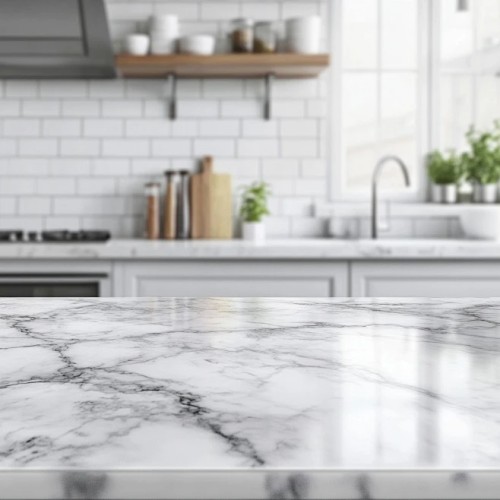
Subsequent Cleaning and Maintenance
1. Clean the countertop
Removing Residue: After polishing, wipe the countertop with a clean cloth dampened with warm water to remove all polishing residue. This helps maintain the countertop’s appearance and prevents dirt buildup.
Dry the countertop: Thoroughly dry the countertop to prevent water stains. Use a soft, dry cloth to ensure the surface is completely dry.
2. Routine maintenance
Daily cleaning: Clean the countertop regularly with a mild detergent and a soft cloth. Avoid using acidic or abrasive cleaning products, as they can damage the surface.
Prevent scratches: Use a cutting board and heat-resistant mat, and avoid cutting vegetables or placing hot pots directly on the countertop. This helps prevent scratches and damage from high temperatures.
Promptly address stains: Clean up spilled liquids immediately to prevent them from seeping in and solidifying. This is especially important for substances such as wine, coffee, or oils.
Precautions
Safety first: When grinding and polishing, always wear safety protective equipment such as goggles, masks, and gloves to protect yourself from dust and debris. Keep the work area well-ventilated to ensure a safe working environment.
Understand material properties: While quartz stone is easier to maintain than natural stone, different brands may have specific maintenance recommendations. Please always refer to the manufacturer’s guidelines for the best maintenance methods.
Seek professional help: If you are unsure how to proceed, or if your countertop is severely damaged, consider seeking professional assistance. Professionals possess the necessary experience and tools to effectively repair your quartz countertop.
In Conclusion
Polishing and buffing a quartz countertop is a simple process that can significantly improve its appearance and extend its lifespan. By following these steps and maintaining regular cleaning, your quartz countertop will remain as good as new for years to come. With proper care, your quartz countertop will continue to be a beautiful addition to your home.
-
Online service
-
Official wechat account

-
QQ:40933769
-
E-mail:sales@z-lion.com
Online Message
Please feel free to give your inquiry in the form below. We will reply you in 24 hours.